

Heroism by the Jews throughout our long history dating back to Biblical times has saved us time after time.
It is a feature of our long survival that so many men and women have offered their lives to save the country.
And the story of their heroism is engraved in the rock of Israel.
In the battle of Tel Hai in 1920 between hundreds of Arabs and the few Jewish pioneers on the agricultural settlement of Tel Hai, Joseph Trumpeldor died from his wounds.
A Russian-born Zionist activist, Trumpeldor was commander of a detachment of reinforcements from nearby kibbutz Kfar Giladi who supported the handful of Jewish residents living in Tel Hai.
He was shot in the hand and stomach and died while being evacuated.
It is claimed he uttered a famous quote on his deathbed.
“It is good to die for our country.”
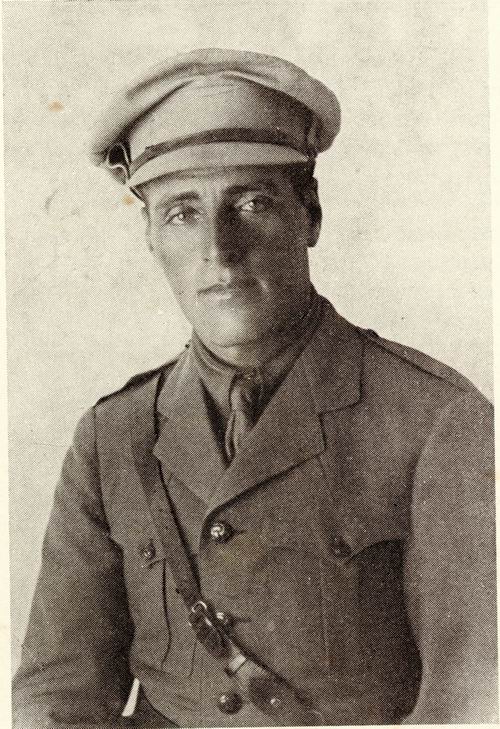
An Ulterior Motive
Trumpeldor rose to prominence in the Russian army during the Russo-Japanese War of 1904-1905.
Not by design, but due to a strange set of unrelated incidents.
Although not too keen to serve in the Czar’s army being well aware of antisemitism (both in the Army and in Russia), he chose to serve Russia to refute antisemitic ideas.
In 1904 Trumpeldor was severely injured in a battle and had his arm amputated.
After recovery he returned to his unit, but early in 1905 the base was captured by the Japanese.
This led to an interesting sequence of events.
The Japanese physicians re-operated on his amputation injury, managing to prevent a life-threatening infection.
Not only did the Japanese medical team offer Trumpeldor improved medical care, but they also saw the opportunity to treat all the Jewish prisoners of war with consideration and respect.
The Japanese had an ulterior motive.
Russia had a bad international reputation as being an antisemitic place.
Following the Kishinev pogroms of 1903 which were widely covered in the world press with appalling images of Jewish suffering published, the Jews outside of Russia publicly supported Japan.
A German-Jewish banker living in the United States loaned the Japanese a considerable sum of money to support their war effort.
Then he encouraged the President of America to help the sides reach a truce, from which the Japanese would benefit.
In fact, when Japan finally won the war, many Jews around the world rejoiced at the defeat of Russia.
Composer Naftali Herz Imber composed a victory song praising the Japanese emperor and the Japanese nation.
The Japanese were convinced that the Jews were an extremely strong nation, both financially and with strong diplomatic contact networks.
That pleased them greatly.
Drawn to Zionism
Even before Trumpeldor was imprisoned by the Japanese he was drawn to active Zionism.
Now in captivity, surrounded by Jewish and Zionist friends, his leadership qualities came to the fore.
He established and maintained a Jewish community in the Japanese prison camp.
The prisoners published a newspaper in Yiddish which was distributed inside and outside the prison camp.
He organised a school for Jewish soldiers, attracting both Jewish and non-Jewish prisoners throughout the entire camp who wished to improve their education about Jews and Judaism.
When the war ended and Trumpeldor was released he was determined to come to Israel and further his Zionist activity.
He came to Israel and settled in Tel Hai where his memory will forever be remembered with the Roaring Lion Monument of Bravery at Kibbutz Kfar Giladi.
Perhaps his greatest achievement was in the formation of the Jewish Legion, but that’s another story.