

They said she was pretty with big sad eyes.
Hadassah Lempel was born in Poland in 1929 and was one of the Tehran Children who arrived in Palestine in 1943.
The Tehran Children and their families were Polish war refugees that were exiled to the USSR after Poland ceased to exist, but the Soviets refused to maintain Polish refugees and exiled them to Siberia and other remote locations.
In 1941 the refugees were freed and fled south to Central Asia, many dying from hunger and disease.
Some of the children were given to orphanages and made their way to Tehran when the USSR enabled Polish refugees to find shelter in Iran.
Altogether 1000 Jewish orphans and 800 adults left the USSR in this path.
In Tehran, the Jewish refugees, together with the Jewish community of Tehran, provided for the children until they were brought to Palestine.
The last group arrived in 1943.
Army Service
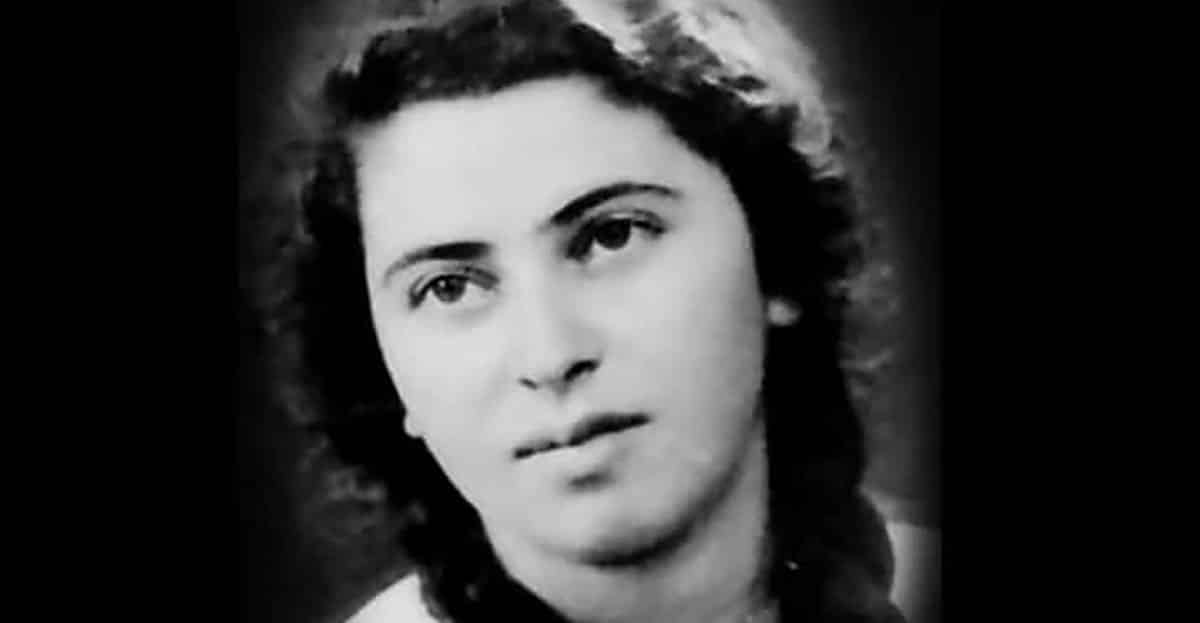
After moving from one kibbutz to another, Hadassah Lempel was eventually drafted into the Palmach, the elite fighting force of the Haganah and a precursor of today’s Israel Defense Forces.
She was assigned to escort convoys bound for Jerusalem.
The supply convoys to Jerusalem left Tel Aviv on the only road connecting the two cities, which passed through the area of Latrun.
The British had opened a police station at Latrun to control the road due to its strategic importance.
On the night of 14th May 1948, as the British were set to leave the country following the Declaration of Independence of the State of Israel, the British vacated the Latrun police station, enabling the Jordanian Arab Legion to take control of it.
On 24-25 May, the first battle for the liberation of Latrun took place. It was a fierce affair, ultimately ending in failure.
A second attempt took place on the night of 30th May, when a unit was sent to breach the police station.
Hadassah Lempel was appointed the mission’s signal operator.
The second attempt also ended in failure. Another fierce and bloody affair.
Israeli author, journalist and Palmach veteran Menahem Talmi, did not take part in the battles for Latrun, but at the time was stationed at Sha’ar Hagai, a location off the road to Jerusalem.
On his two-way radio he was able to listen what was transpiring in the armored vehicles that were sent to breach the police station.
“I heard her voice, the clear, subdued voice of a girl caught in the midst of the awful and hopeless battle. I heard her reports, without knowing exactly where she was.”
“Her speech and voice were bone chilling. Like needles pinching your flesh.”
But her voice was fading and Talmi heard others also trying to reach her in vain on their two-way radio.
He understood what they all understood.
“For years, the voice of this anonymous signal operator haunted me. For years this situation haunted me: the experience of listening to the death of a human being over the airwaves.”
Hadassah Lempel’s voice was the last voice heard from the unit that attempted to breach the courtyard of the Latrun police station on the night of May 30th 1948.