

On 15 April, 1945 British troops liberated the Bergen Belsen concentration camp in Germany.
The surviving 60,000 prisoners had suffered unbelievable horrors, but they still had hope.
Five days after liberation, the Jewish prisoners held a Shabbat service in the camp.
For many of them it was the first time they had taken part in a Jewish service in six years.
The Friday evening Shabbat service was held in the open-air, arranged and conducted by Rabbi Leslie Hardman, a Jewish British Army Chaplain.
British broadcaster Patrick Gordon Walker was present and recorded the emotionally raw service.
At the conclusion they sang Hatikvah, expressing grief for those who had not survived, but singing with strength and resilience with whatever energy they still possessed in the hope they would find renewed life in Eretz Yisrael.
In retrospect, there was a certain irony in this specially conducted Shabbat service.
Earlier, in British Mandate Palestine, authorities banned the singing or musical broadcasting of Hatikvah as it was considered provocative.
Holocaust survivors onboard the famed American rescue ship SS Exodus sang the Hatikvah as it pulled into the port of Haifa.
The British arrested the survivors and returned them to Germany for reinternment in DP camps.
Hatikvah History
The text of Hatikvah was written by Naftali Herz Imber, a Jewish poet from a Polish city nicknamed ‘The City of Poets’.
In 1882, Imber emigrated to Ottoman-ruled Palestine where he published his first book of poems.
One of the poems, Tikvateinu, published in 1886 stirred Jews everywhere, especially those who had lived under antisemitic oppression, also farmers in the Jewish settlements in Eretz Yisrael.
Imber has been described as the “first Hebrew beatnik.”
He made a mockery of serious matters and had a sardonic vulgar wit.
In his book Unpublished Legends and Traditions of the Jewish Nation, he claimed that the Tabernacle carried by the Hebrews during their 40 years in the desert contained an electrical generator.
He also suggested that King Solomon invented the telephone.
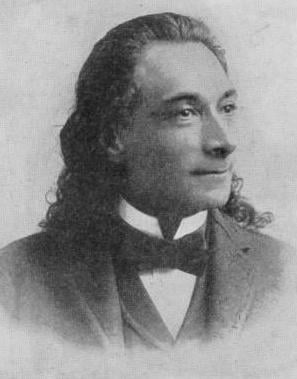
Music for Tikvateinu was composed by Shmuel Cohen, a Bessarabian-born Jewish musician.
In 1887, he immigrated to Ottoman Palestine, motivated by the rising tide of Russian-sponsored antisemitism and terrorism.
Earlier, his brother had also immigrated, settling in Yesud HaMa’ala, the first modern Jewish community and moshava in the Hula Valley.
Cohen’s brother had heard the poem in the moshava when Imber toured around the settlements reading poems he had composed.
Shmuel Cohen was deeply impressed by the beauty and longing of the poem and decided to set it to music.
The music was based on a Moldavian/Romanian folk song.
It proved to be a work with enthusiastic appeal and spread rapidly around the Zionist settlements in Palestine.
Within a few years, it spread globally to pro-Zionist communities and organisations, becoming the unofficial Zionist anthem.
In 1933, at the 18th Zionist Congress in Prague, the anthem was formally adopted and renamed Hatikvah.
When the State of Israel was established in 1948, Hatikvah was unofficially proclaimed the national anthem.
It did not officially became the national anthem until 2004 when an abbreviated and edited version was sanctioned by the Knesset in an amendment to the Flag, Coat-of-Arms and National Anthem Law.