
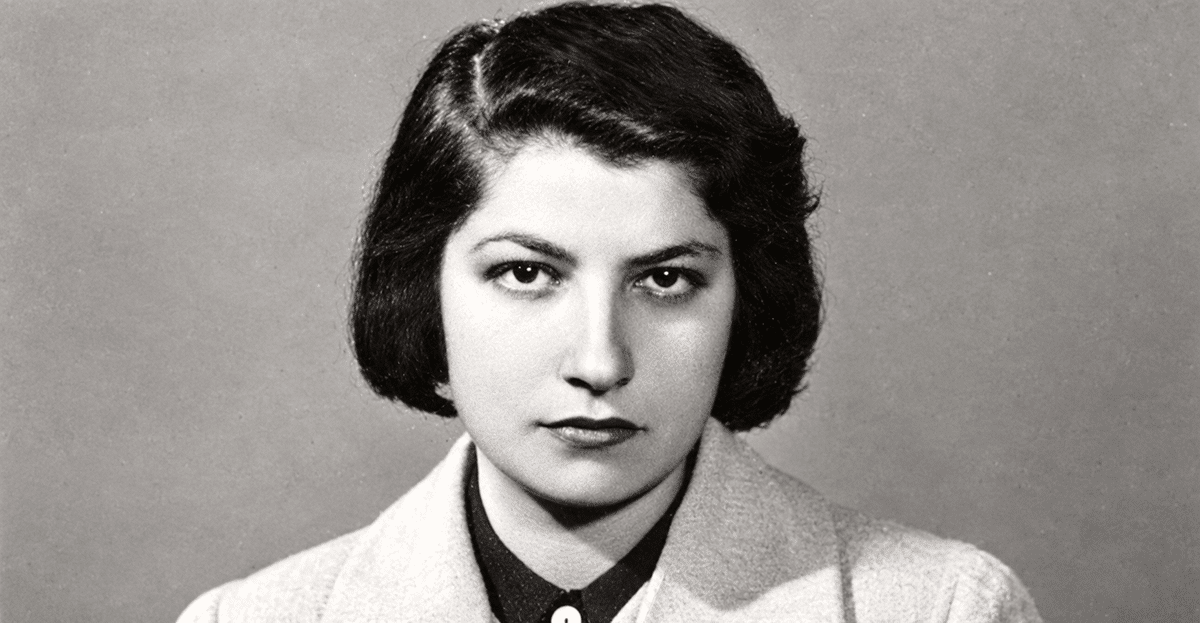
Those who knew her recall she had blazing eyes and a penetrating glance.
She was simple and direct, demanding the maximum of others and of herself. For her, thought and action were one.
Zivia Lubetkin was born in Poland in 1914 and educated in Hebrew by private tutors.
At an early age she joined the Zionist-Socialist Youth Movement, shortly after becoming active in the ranks of the resistance in German-occupied ghettos, risking her life by leaving Soviet-controlled areas.
She was one of the founders of a fighting organisation participating in the Warsaw Ghetto uprising in April 1943.
Following the end of the war, Zivia was active in the Holocaust survivors community in Europe, helping the Jews to cross borders en-route to Eretz Yisrael through illegal channels.
“We were aware of one thing. We could not rebuild our lives in Poland. We saw before us tens of thousands of Jews and knew the only solution for them was to get them out to Eretz Yisrael immediately.”
Following the liberation of Warsaw in 1945, Zivia immigrated to British mandate Palestine with her husband, ghetto survivors, resistance workers and partisans.
On 7 June 1946, Zivia Lubetkin delivered a landmark, comprehensive public testimony at a United Kibbutz Movement committee at Kibbutz Yagur.
It was the first major and detailed public account delivered in British Mandate Palestine regarding the scale of the Holocaust.
She spoke for a full day inside a large tent about the destruction of Polish Jewry, and the realities and horrors of life inside the ghettos.
It broke the long silence and misunderstanding surrounding the fate of European Jews and the brave organised Jewish resistance.
“What gave us this moral strength? We were able to endure the life in the ghetto because we knew that we were a collective. A movement.”
She stressed it was essential that the horrific events be documented and disseminated throughout the world.
A New Life
In 1949 Zivia, her husband and ghetto survivors and partisans founded Kibbutz Lohamei HaGeta’ot (The Ghetto Fighters’ Kibbutz), a cooperative community in North Galilee in the north of Israel.
Her energetic work for the State of Israel never ceased.
For Zivia it was a new life, a life of dedication to the newborn State of Israel with much important work to be fulfilled.
She became active in the Secretariat of the United Kibbutz Movement, the Histadrut and the Zionist Organisation.
For a brief period she was director of the Aliyah Department of the Jewish Agency, but ultimately decided to return to her kibbutz where she served as secretary several times, longer than any other member.
Zivia never sought public recognition for her numerous activities, combining manual labour on the kibbutz with public service.
Both Zivia Lubetkin and her husband Yitzhak Zuckerman testified at the Eichmann Trial in 1961.
Presiding Judge at the session was Judge Moshe Landau and he questioned them about conditions in the Warsaw Ghetto and elsewhere as well as activities of the Jewish fighting force.
Zivia spoke bravely about the resistance of the Warsaw Ghetto fighters.
“The great German heroes withdrew in tremendous panic in the face of handmade Jewish hand-grenades and bombs.”
Yitzhak remarked how horrified he was on hearing about the murder of some 70,000 Jews in the Ponary Massacre in Vilna between 1941 and 1944.
Zivia lived on her kibbutz until she died in 1978.
In 1980 her speech at the Kibbutz Convention in 1946 at Kibbutz Yagur has been published in Hebrew and other languages.