
One thing we never really stop to think about as we wander around the White City of Tel Aviv is why it feels so good to be on foot. We drift down shaded boulevards, cut through quiet residential streets, pause in pocket parks, sit for coffee, keep walking, and somehow hours pass without effort. The city seems to cooperate with us. It offers relief from the sun, places to stop, things to see, and a sense of ease that makes wandering feel natural rather than accidental.
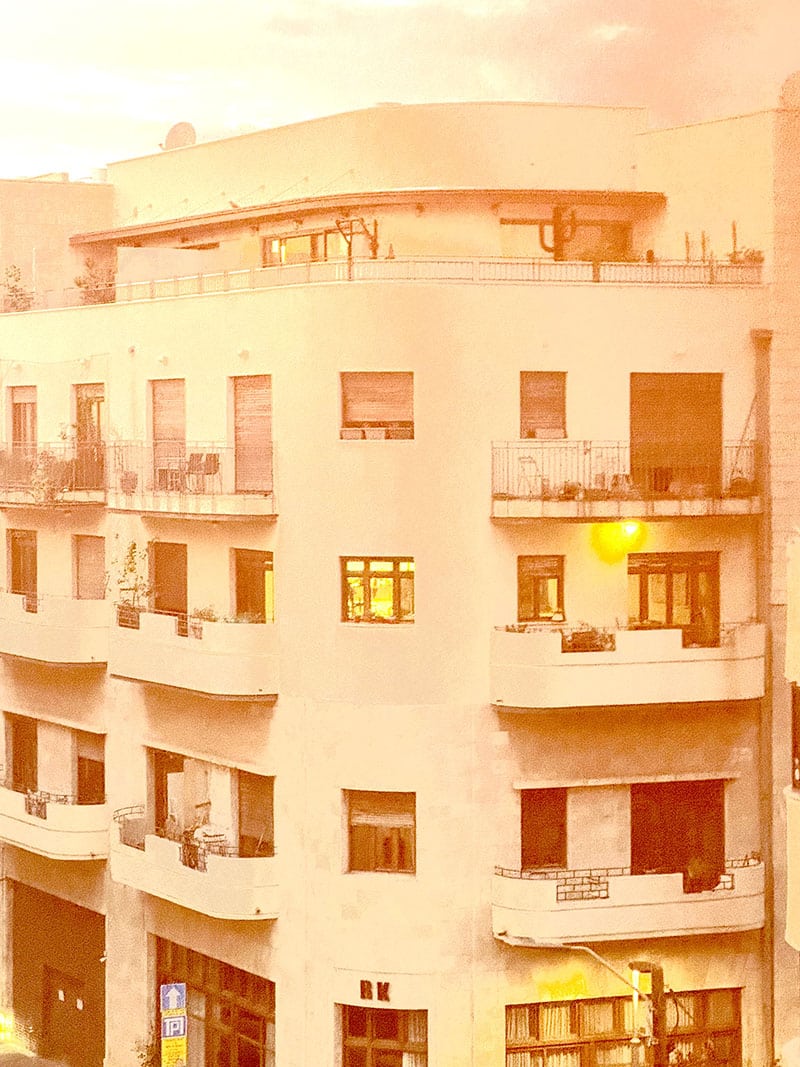
That feeling wasn’t accidental at all. It was planned – deliberately and imaginatively – nearly a century ago, by a man who wasn’t an architect, wasn’t Jewish, and didn’t even begin his career thinking about cities.
His name was Patrick Geddes, and before he ever drew a street, he studied life.
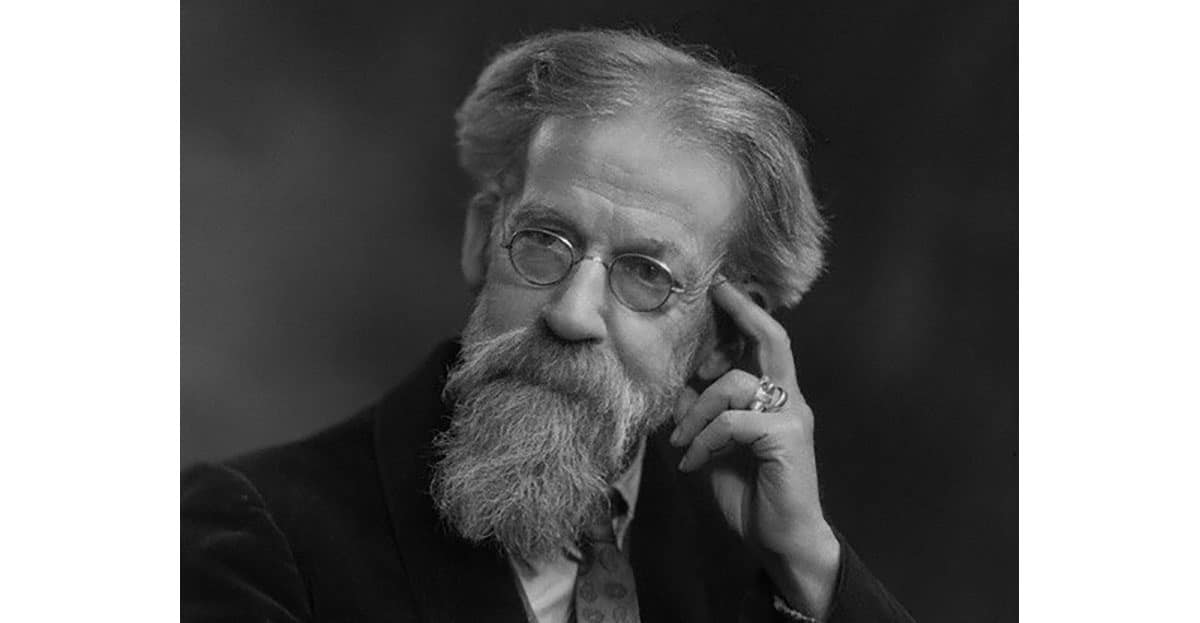
Born in Aberdeen in 1854, Geddes trained as a biologist, lecturing in zoology and botany and later holding academic posts across Britain, France, and India. His scientific work focused on living systems—how organisms interact with their environments, how health depends on balance, and how growth happens over time. From there, he moved naturally into sociology and education. Cities, to Geddes, were simply another form of life.
By the time he was invited to Palestine in the mid-1920s, Geddes had developed a radical idea for his era: cities should be planned like living organisms, not machines. Streets were circulation systems. Parks and gardens were lungs. Neighbourhoods were ecosystems. And if any one part failed, the whole organism suffered.
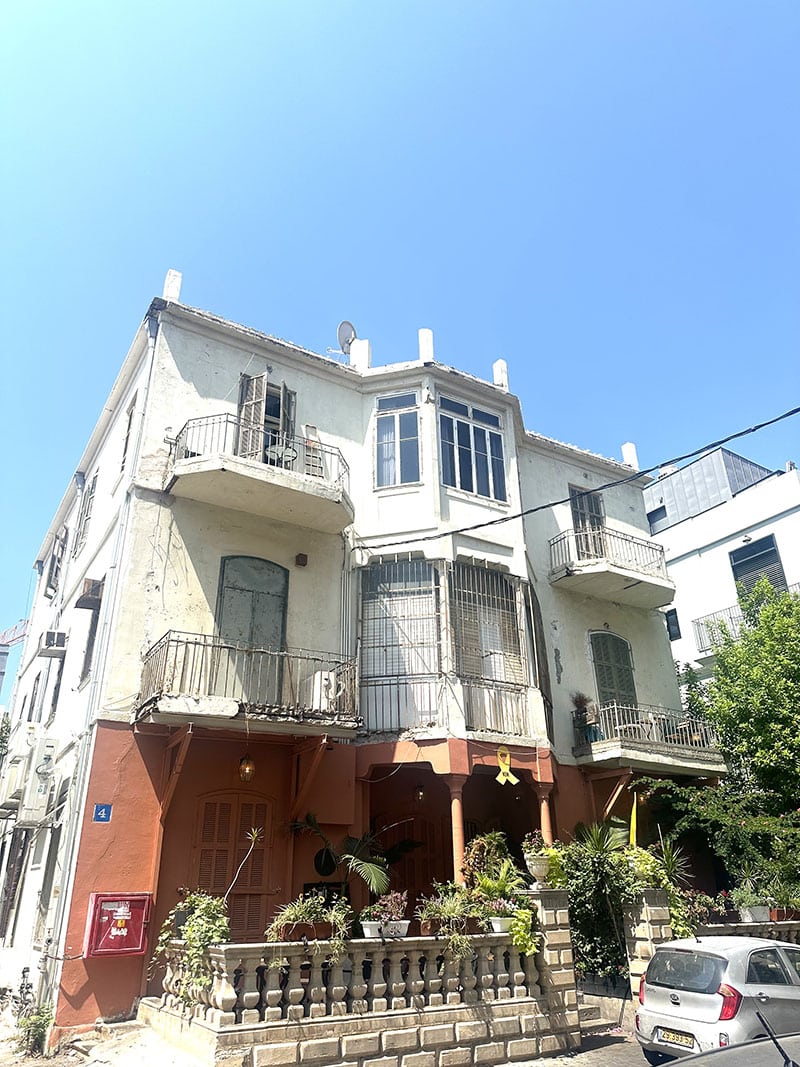
In 1925, Tel Aviv was only sixteen years old and expanding rapidly north of Jaffa. Its mayor, Meir Dizengoff, knew the city needed a guiding vision – one that could handle growth without destroying the quality of daily life. Geddes was commissioned to write a master plan for the city’s future.
What he produced was not a dry technical document but a deeply human one. His report – 68 typed pages in English – reads like a meditation on what makes a city good to live in. He rejected rigid grids and monumental scale. He warned against skyscrapers and speculative development. Instead, he proposed a garden city adapted to the Mediterranean climate: shaded streets, green boulevards, modest building heights, and neighbourhoods organised around shared inner gardens.
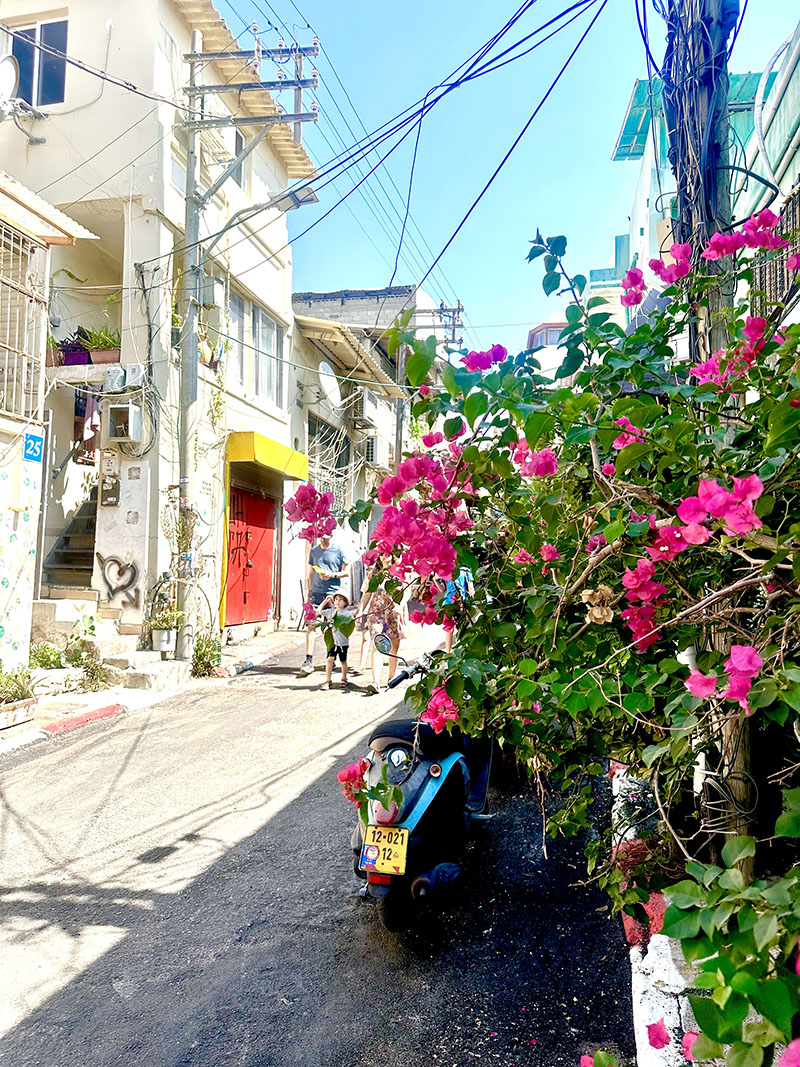
The heart of Geddes’s plan was deceptively simple. By grouping homes into large residential blocks and reducing the number of long roads, the city could save space and money – and use both to create internal green spaces. These inner gardens would be protected from traffic, dust, and noise. They would belong to residents, especially children. Streets would still bustle, but homes would open onto quieter, greener worlds.
This is where Geddes becomes quietly radical. He cared intensely about children and gardens – and about fruit. He urged the planting of fruit trees and vines, encouraged vegetable gardens, and lamented the destruction of existing orange groves. He dismissed fears about children stealing fruit as joyless and short-sighted. If children wanted fruit, his answer was not prohibition but abundance: plant more. Let them eat. Let them learn.
For Geddes, a healthy city fed its children – not only culturally and intellectually, but literally. He praised school gardens for giving young people contact with living processes, believing urban children were too often cut off from soil, growth, and nature. A biologist to his core, he saw fresh air, sunlight, greenery, and play as civic necessities, not luxuries.
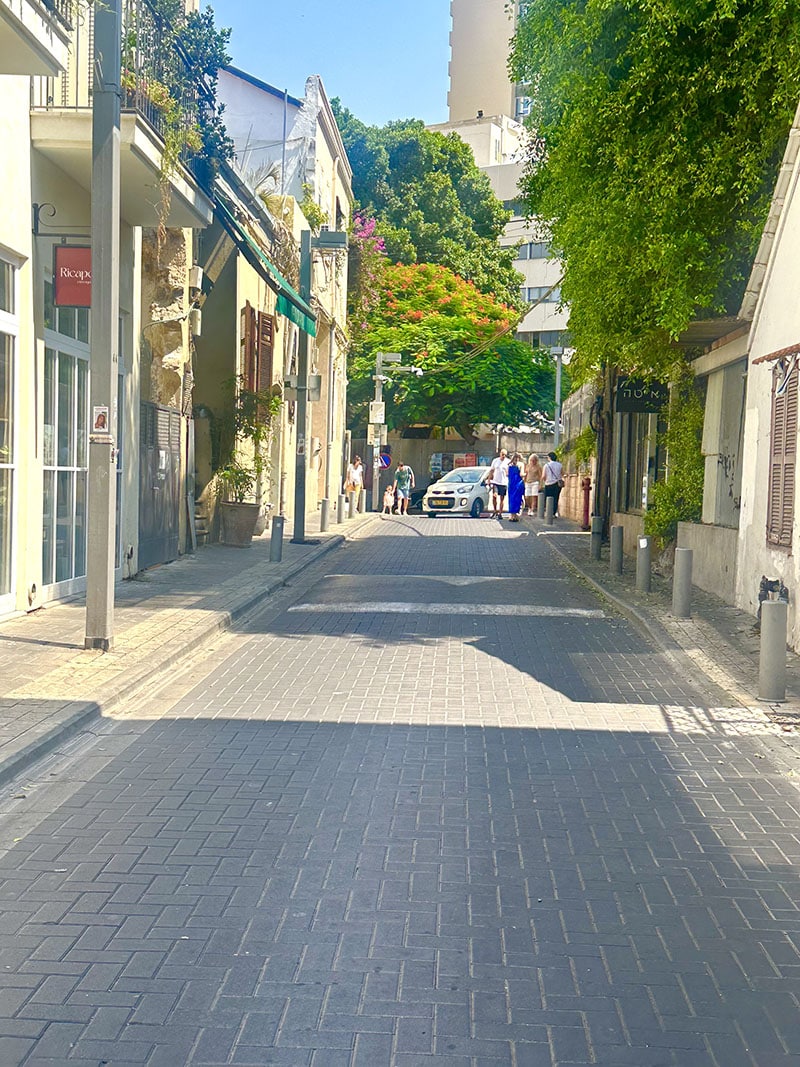
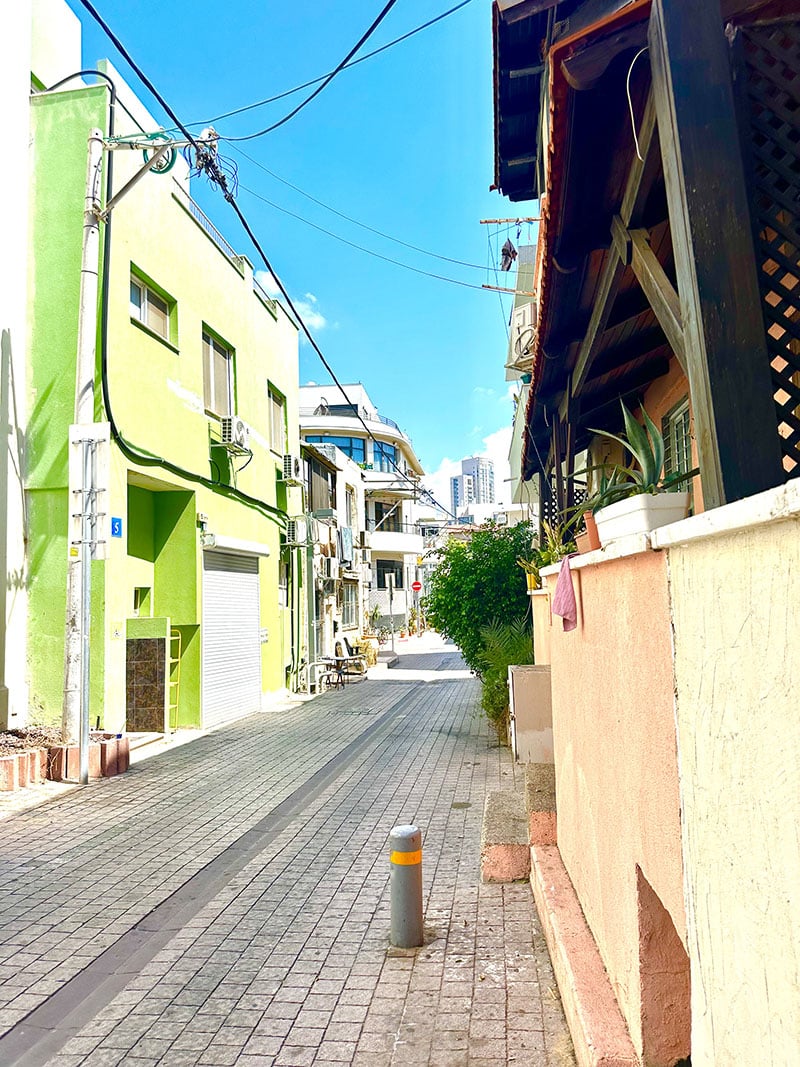
His planning instincts shaped Tel Aviv’s physical form in lasting ways. Streets were kept relatively narrow and shaded to soften the Mediterranean heat. Boulevards such as Rothschild Boulevard were conceived as green arteries, linking neighbourhoods while offering space to walk, sit, and meet. East–west routes were aligned to channel sea breezes through the city. Importantly, Geddes avoided imposing a strict grid. Instead, streets followed the land, existing paths, and patterns of movement, giving Tel Aviv its organic, humane feel.
Neighbourhoods like Neve Tzedek still reflect this logic: intimate streets, human scale, and a sense that the city unfolds gradually rather than asserting itself all at once.
Not everything unfolded as Geddes imagined. The pressures of mass immigration in the 1930s, particularly with the rise of Nazism in Europe, forced the city to densify. Buildings grew taller, plots were used more intensively, and Tel Aviv did not become the low-rise garden city overflowing with fruit trees that Geddes had envisioned. Children today are not casually plucking oranges outside their windows.
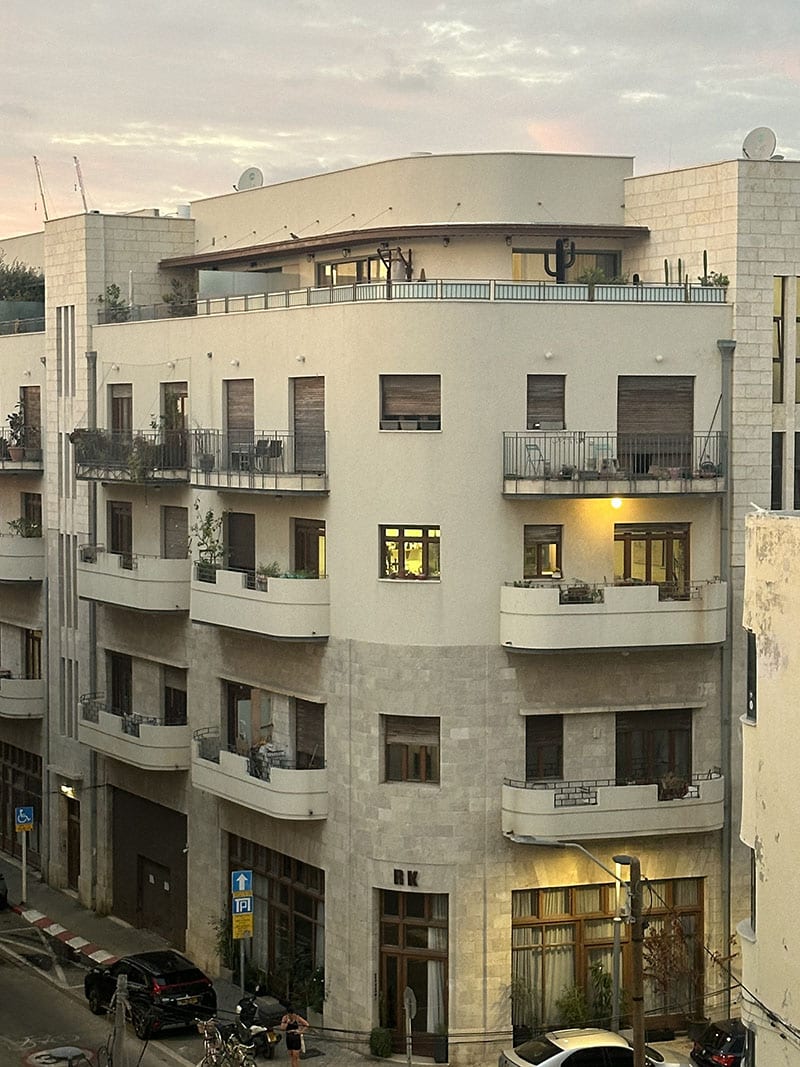
And yet – this is the remarkable part – his underlying structure survived. The size of blocks, the internal logic of neighbourhoods, the emphasis on walkability, shade, and greenery all endured adaptation. Later modernist architects, including those influenced by the Bauhaus, designed compact buildings that fit seamlessly into Geddes’s framework. Density arrived, but air and light came with it.
Geddes also refused to separate nature from culture. His report devoted serious attention to synagogues, libraries, theatres, cinemas, universities, and music. Culture, in his mind, was the organic counterpart to gardens. A good city nurtured body, mind, and spirit together. Tel Aviv today – vibrant, argumentative, creative, musical – fulfils that vision in full.
So Tel Aviv is not quite the fruit-filled children’s paradise Geddes imagined. But it is still one of the most walkable, alive, and humane cities in the world. It works because it was designed by someone who thought first about life – how people move, rest, meet, play, and grow.
A biologist planned it. And every effortless walk through the White City is proof that he understood something enduring about what cities are really for.