

There is a moment that tends to unsettle visitors to Israel. It usually happens in public. A grown adult – sometimes a soldier, sometimes a tech founder, sometimes both – answers their phone and immediately softens.
Yes, Mum.
No, Mum.
Yes, I ate.
I won’t forget to drink.
No one nearby laughs. No one rolls their eyes. No one sighs. In Israel, the mother on the line outranks you. Always. This is not infantilisation. It’s not weakness. It’s the social contract.
If you want to understand Israel, you can start with geopolitics or security doctrine. You can memorise acronyms and cabinet structures and argue about borders. Or you can start where most Israelis do: with their mothers.
The Israeli mother – “ima” in Hebrew – is not the Jewish‑mother caricature exported via American sitcoms and stand‑up comedy. She is something more operational. Less punchline, more infrastructure. She is funny, anxious, demanding, loving, intrusive and fiercely competent – often in the same sentence. She worries constantly, but she also assumes you will cope. She expects a lot because she gives a lot. And she has very little patience for people who confuse feelings with inaction.
This matters more than it sounds.
October 7 did not only expose military failures and intelligence blind spots. It exposed something else, too: the sheer force of Israeli motherhood when the unthinkable happens. While governments debated and institutions stalled, mothers organised. They showed up at Hostages Square. They built WhatsApp groups that moved faster than official supply chains. They spoke to cameras, diplomats, journalists and anyone else who would listen – not as polished advocates, but as people who refused silence.
Rachel Goldberg‑Polin, whose son Hersh was kidnapped from the Nova music festival and later died in captivity, became one of the clearest public voices of the hostage families. She spoke like a mother first and an advocate second, jumping between practical details and big, impossible questions. At one point she said the families were living on a different planet, and you could hear that she meant it as diagnosis, not metaphor. Israeli mothers are very good at this: translating private panic into language that makes strangers uncomfortable enough to pay attention.
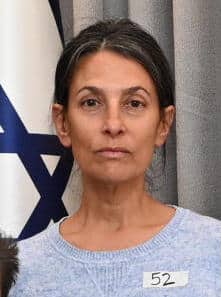
Others spoke in details so concrete they cut through politics entirely. Idit Ohel, whose son Alon was held in Gaza, received a birthday message passed hand‑to‑hand through tunnels and war. When she described his conditions — shackled, little food, no daylight — the power was in the specificity. Israeli mothers don’t deal in abstractions. They want to know: how much did he eat, did he sleep, did anyone change the bandage. In a region addicted to slogans, the mother drags you back to the body.
Then there was Liora Argamani, terminally ill, asking simply for a last embrace with her daughter Noa. No framing. No manifesto. Just a request so plain it short‑circuited spin. Mothers, when they speak plainly, become a kind of moral enforcement mechanism.
And some Israeli mothers weren’t advocates at all. They were hostages themselves. Judith Raanan, kidnapped with her daughter, later recalled her daughter saying she didn’t want to go, and her own attempt to reassure her with a promise of a vacation she would never forget. It’s a line that belongs in a sitcom, except it ended in captivity. That whiplash — ordinary life colliding with catastrophe — is something Israeli mothers absorb and metabolise in real time.
If this is starting to sound like myth‑making, let me complicate it. Israeli mothers can be exhausting. They hover. They catastrophise. They weaponise worry. They can make a 35‑year‑old feel like a fragile toddler with one slightly cold elbow. Israeli social media is full of jokes about it – viral skits of mothers sending seventeen WhatsApps to ask if you’ve eaten, three missed calls to check why you’re not answering, and a follow‑up interrogation about what you ate and why not something warmer.
But that’s precisely what makes them psychologically interesting.
They are not gentle symbols of comfort. They are engines. They nag because they care. They interfere because they assume responsibility. They love loudly and demand competence in return. They are often wrong, occasionally unfair, and frequently hilarious. But when things go wrong – really wrong – they are still there, still calling, still insisting that “we’ll see” is not an acceptable answer.
As a mother myself, I recognise this energy immediately when I’m in Israel. I hear it in the tone of voice. I see it in women my age, older than me, younger than me. And, slightly uncomfortably, I feel it in myself. It’s both amusing and confronting to realise that what you thought was personal neurosis might actually be cultural inheritance. It turns out I’m not uniquely anxious; I’m just running the standard operating system. I’m basically a software update: Ima 2.0, now with push notifications.
The formidable Israeli mother is not an inspirational poster. She’s an ecosystem: worry plus expectation, fear plus functionality, attachment plus pressure. She does not deny anxiety – she just refuses to let it be the final state. You can panic. You can complain. You can fall apart. Briefly. Then you keep going.
This produces a particular kind of adult. Someone who worries out loud, argues their way through stress, calls three people for advice, ignores half of it, and somehow lands on their feet anyway. In Israel, this isn’t just a personality trait. It’s practically a cultural export.
You see it everywhere. In how Israelis relate to institutions – sceptical but not passive. In how they improvise when systems lag. During the war, when bureaucracy slowed, mothers filled the gap: organising food, equipment, childcare for reservists, emotional first response for entire neighbourhoods. Kitchens became logistics hubs. WhatsApp groups became supply chains. This wasn’t ideology. It was muscle memory.
The Israeli mother does not wait to be invited into the process. She shows up with containers.
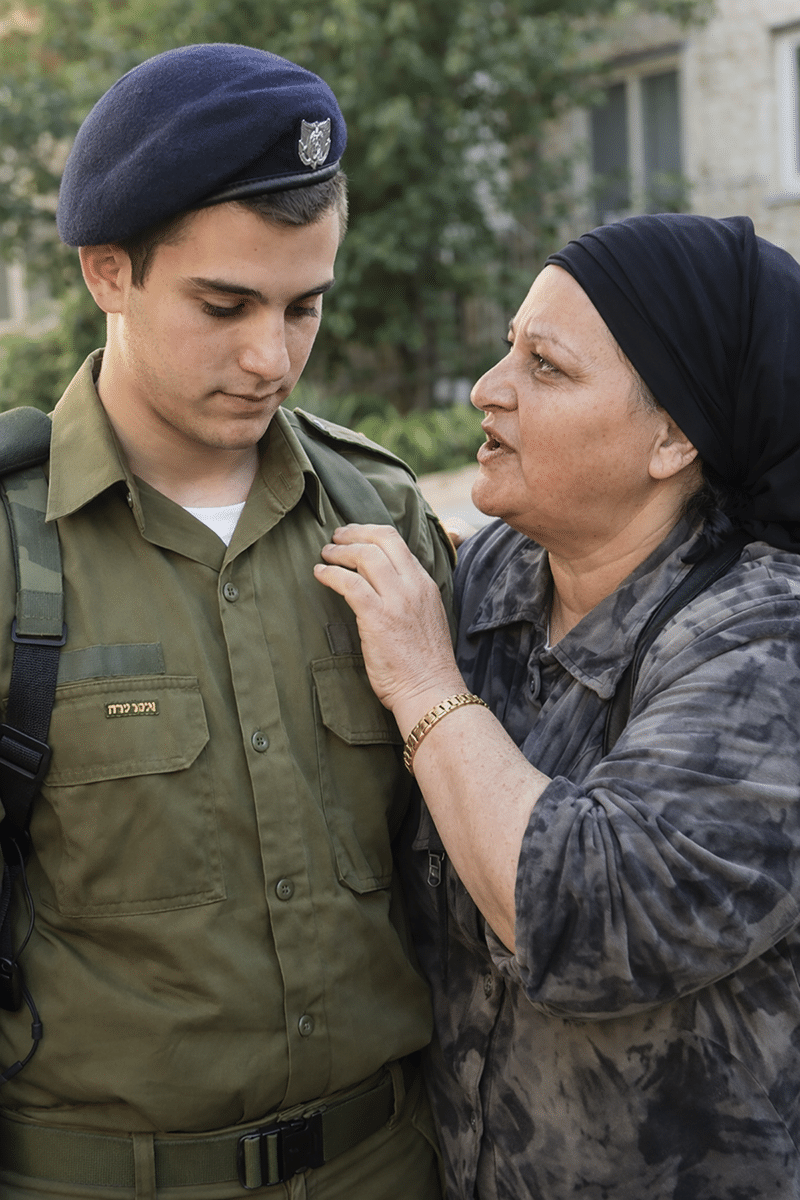
There’s a temptation to dismiss all this as sentimentality, but it has consequences. Israel is a society that lives with risk as a baseline. Children grow up knowing they will serve. Parents grow up knowing they will worry. The result is a population trained early to tolerate stress without freezing – to function amid uncertainty, to argue, improvise and keep moving even when things are unresolved.
Is this the reason Israel keeps functioning? I’m not offering a neat causal theory. Economists can fight over that. But it’s not absurd to wonder whether a culture shaped by mothers who expect coping, responsibility and action produces adults who behave the same way – in startups, hospitals, reserve units and crises.
They are not trying to hold the country together. They would find that suggestion exhausting. They are just trying to make sure everyone survives – preferably fed, preferably warm, preferably with a jumper.
And if you’re still not hungry?
She told you so.