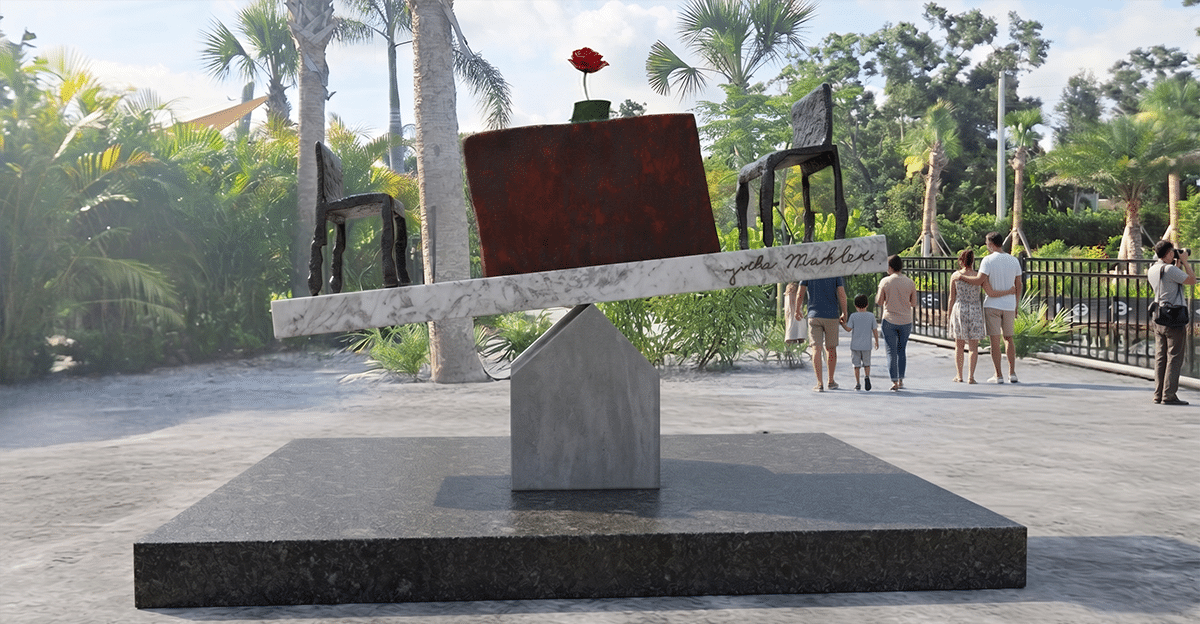

In a Jaffa neighbourhood filled with artists, an Israeli sculptor has turned an eight-year-old Holocaust victim’s drawing into something the Nazis could never erase.
I want to start by telling you a little about Noga, because it is rather special in its own right. Sitting on the seam between Tel Aviv and Jaffa, it is one of those pockets of Israel where creative people seem to collect – artists, designers, quirky studios, restaurants and bakeries tucked among its streets. Israeli sculptor Dan Reisner has lived and worked here for decades.
I hadn’t set out to see any art that day. I happened to walk past Dan’s studio, spotted his work through the window and, curious, wandered in. That small detour led me to something I could never have expected: the drawing of an eight-year-old Jewish boy murdered at Auschwitz more than 80 years ago, transformed into a huge bronze sculpture.
The boy was Jiří Mahler, known as Jirka. In June 1944, he was imprisoned in Terezín, the Nazi ghetto and concentration camp in what is now the Czech Republic. Life there meant overcrowding, hunger, disease and the constant fear of deportation. Yet children were still taught where possible. Jirka attended art classes run by Friedl Dicker-Brandeis, an artist and teacher who encouraged them to draw and paint despite what was happening around them.
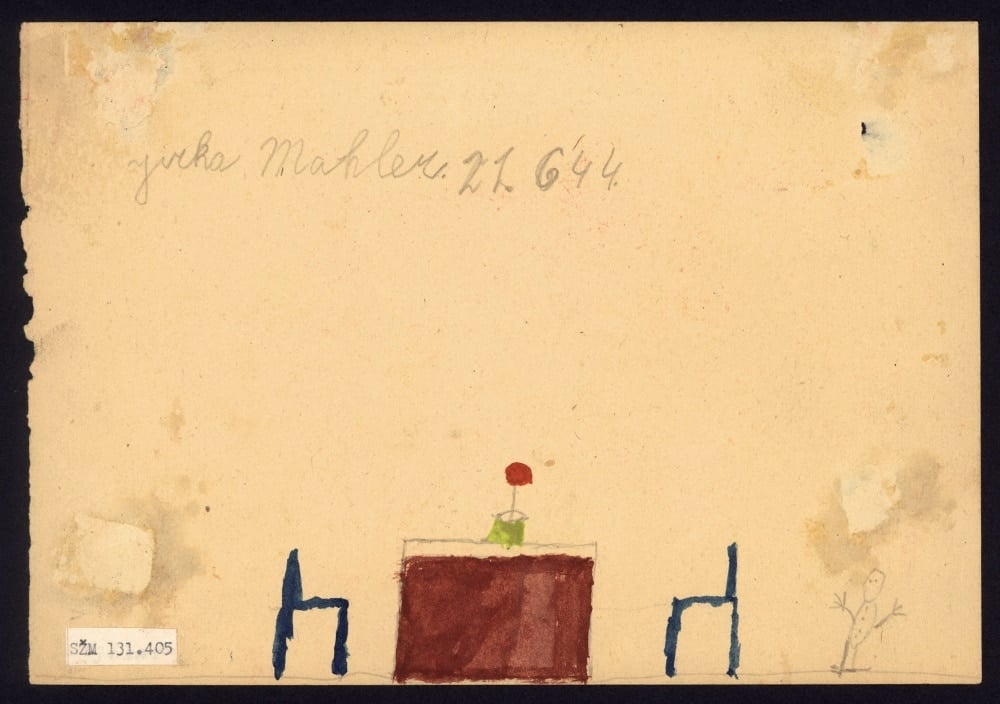
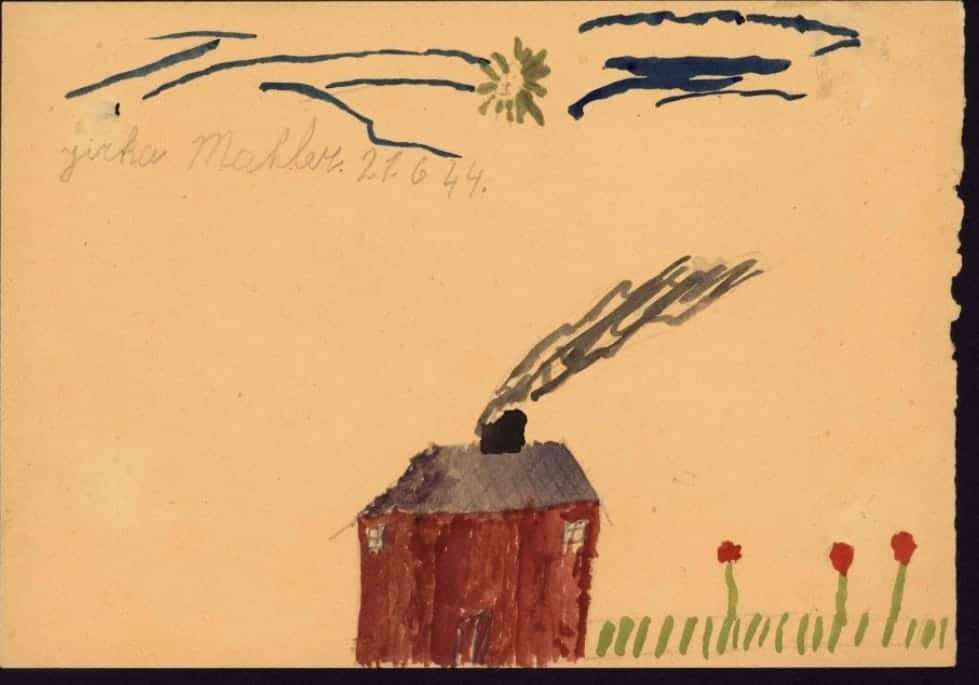
Jirka drew a table, two chairs and a flower. On the back of the same piece of paper, he drew a house. Nothing particularly unusual there. Children draw houses and flowers. They draw the things around them and, sometimes, the things they wish were around them. He made it just two days before representatives of the International Committee of the Red Cross visited Terezín.
The Nazis had been busy preparing. They needed their visitors to see something other than the reality of this place so buildings were painted, a playground was added and prisoners were deported to reduce the overcrowding. Terezín was, in effect, given a Nazi makeover.
Except, here, the people being moved out of sight were being sent towards their deaths. The Nazis were constructing the illusion of ordinary Jewish life for the outside world. At almost exactly the same time, an eight-year-old Jewish boy was drawing the ordinary life that had actually been taken from him: a house, a table, two chairs and a flower.
Four months later, he was deported to Auschwitz and murdered.
Before Friedl Dicker-Brandeis met the same fate, she gathered the children’s artwork into two suitcases and hid it and thus, while the children did not survive, their drawings did. Thousands are now held by the Jewish Museum in Prague.
One of these drawings eventually found its way to an Israeli artist. Dan came across Jirka’s drawing online while researching a commission for the garden of the Chaifetz Holocaust Memorial and Education Centre in Sarasota, Florida. He normally begins a sculpture with his own sketches. This time, the blueprint had already been drawn for him by an eight-year-old boy – Jirka’s signature, in his own handwriting, has been enlarged and incorporated into the work.
What struck Dan was how little Jirka seemed to want. No grand fantasy. Just a house, two chairs, a table and a flower – things most of us barely notice because we see them everyday.
Dan brought the two sides of Jirka’s drawing together. The house became the base of the sculpture, with the table and two rough-edged chairs balanced above it. From the dark bronze rises a red flower on a thin green stem.
The Nazis built a false Terezín for the world to see and Jirka only had a few art materials. Their version vanished yet his survived – and 80 years later, an Israeli artist gave that fragile little drawing form and a new life using hundreds of kilograms of bronze.