

One cannot fully understand the early development of modern Zionism without studying the impact of rabbis such as Shmuel Mohilever, one of the founders of religious Zionism.
He was born in a city close to Vilna to a rabbinic family and stood out as a prodigy of religious study.
At the age of eighteen and a half, after only six months study at the best yeshiva in Lithuania, he was ordained into the rabbinate.
However, he chose to become a merchant selling flax rather than choose a rabbinical posting.
Following business reversals, after 5 years he accepted the office of rabbi in his home village.
After 6 years his reputation as a fine rabbi was enhanced and he received successive calls to even larger communities.
Rabbi Mohilever was moved to practical, as distinct from theoretical, Zionism by the Russian Empire pogroms of 1881.
Tens of thousands of Jews had fled across the Russian border to Poland, at that time held by Austria.
Rabbi Mohilever attended a conference of Western Jewish leaders to decide what to do with the refugees.
He suggested they be diverted to Palestine, but that had little support.
The rabbi then visited Warsaw where he had better success and was instrumental in organising the first formal section of the Hibbat Zion (Lovers of Zion) Movement.
Hibbat Zion was originally designed to consider the concept and possibilities of settling mass numbers of Jews in Eretz Yisrael.
It was dominated by secularists like Leo Pinsker, though Rabbi Mohilever remained one of the few distinguished figures among the rabbis of the old school to become active.
His decision to remain in Hibbat Zion side by side with others who did not follow Jewish orthodoxy was a crucial turning point in the history of religious Zionism.
It was a decision that did not meet with the approval of the ultra-orthodox community.
But Rabbi Mohilever pressed on:
“Would we not receive anyone gladly and with love, who though irreligious in our eyes, came to rescue us?”
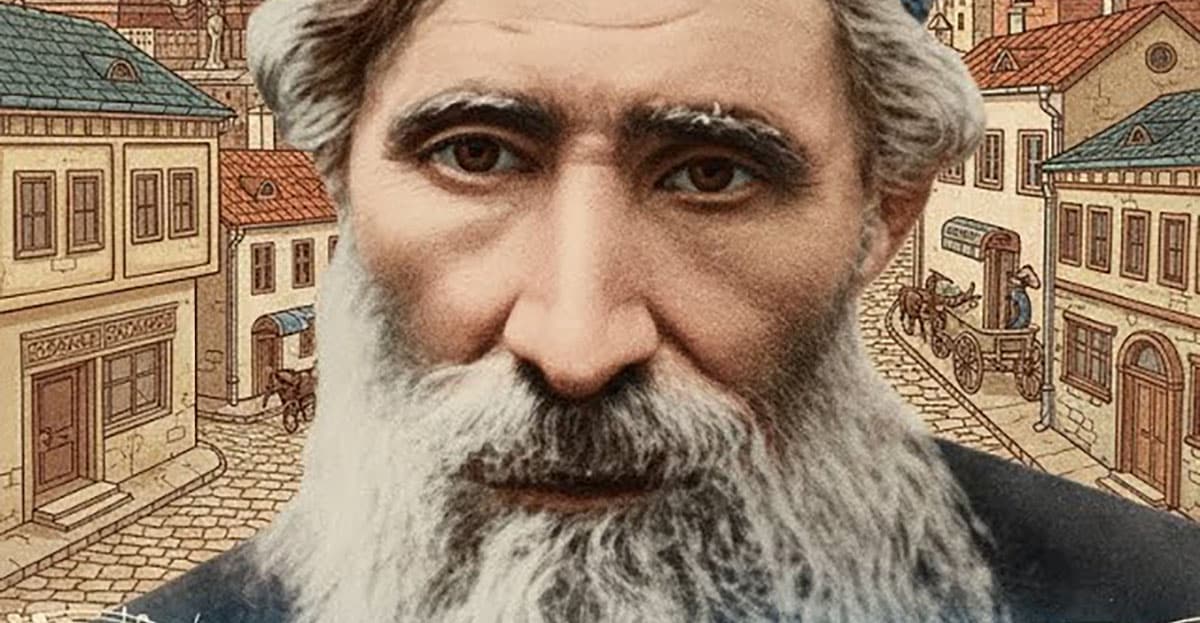
In a letter read at the First Zionist Congress (1897), which Rabbi Mohilever was unable to attend due to ill-health, he wrote:
“Our hope and faith has ever been and still is, and instead of our being wanderers upon the face of the earth, ever moving from place to place, we shall dwell in our own country as a nation, in the fullest sense of the word.
Instead of being the mockery of the nations, we shall be honoured and respected by all peoples of the earth. This is our faith and hope as derived from the words of our prophets and seers of blessed memory and to this our people clings.”
Great and Heroic
With the wisdom of hindsight, in his time Rabbi Shmuel Mohilever was an inspiration to the Jewish people around the world.
A rabbi, superbly versed in the teachings of Torah, but who struggled against the stream, giving complete and unreserved support for shortening the Exile and advancing the Redemption for the Jewish people, wherever they lived, and in whatever form of religious belief they followed.
A teacher who supported the study of the physical sciences in addition to religious studies.
He advocated that learning a profession and indulging in creative work was essential to the fulfillment of an honourable Jewish life.