
Yitzhak Hofi (1927-2014) was an Israeli military officer and spymaster who rose through the ranks of the Palmach and Israel Defense Forces to Northern Commander during the 1973 Yom Kippur War, before directing Israel’s foreign intelligence service (Mossad) from 1974 to 1982.
Hofi conducted his services to Israel in a minimalistic style which instilled confidence in his troops.
He was one of Mossad’s greatest and most influential leaders, highly sensitive to the dangerous and often clandestine nature of their operations.
Hofi was widely credited with the introduction of professionalised training for Mossad operatives following the failure of intelligence prior to the 1973 Yom Kippur War.
What was important was rebuilding morale and teamwork with mutual respect for each other.
In this regard he set a fine example of personal leadership.
“Don’t take care of me. Take care of the State of Israel.”
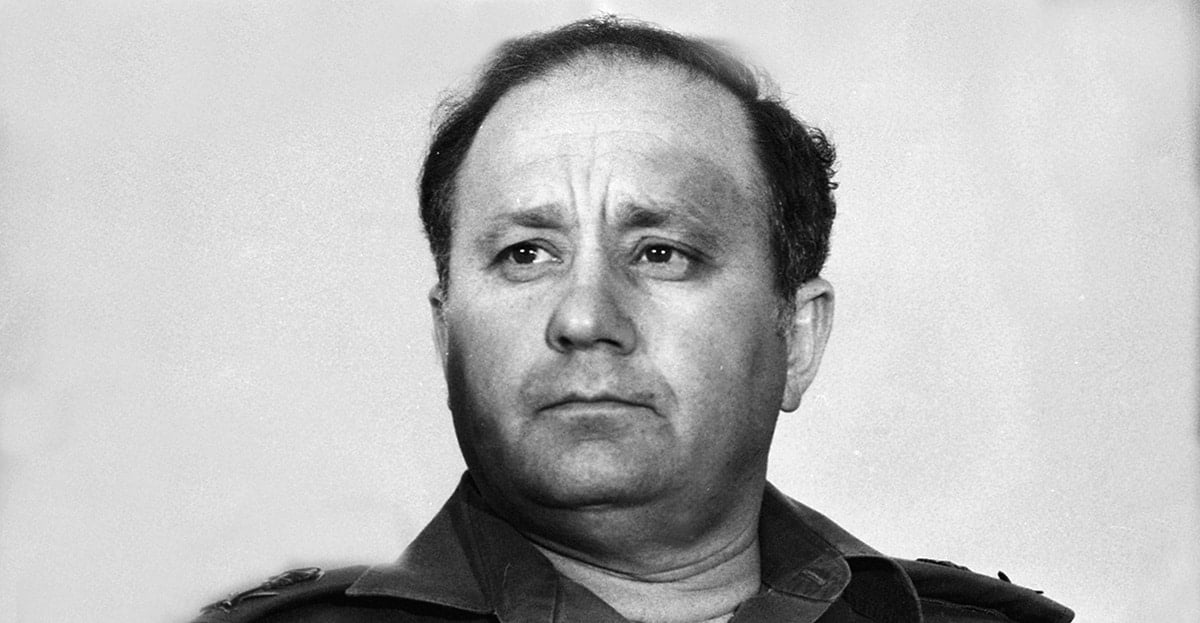
Under Hofi’s leadership Mossad conducted some remarkable and noteworthy achievements.
He played a critical architectural and logistic role in the success of Operation Entebbe in July 1976, sending Mossad agents, first to survey the Entebbe International Airport to obtain precise layouts, and monitor the hijackers’ movements.
Then, using his personal relationship with Kenyan intelligence officials to secure a vital refueling stop for the Hercules transport planes in Nairobi on their return journey.
During high-level government debates about authorizing the raid, he lobbied Prime Minister Yitzhak Rabin and the cabinet, arguing that a rescue was feasible despite the immense risks.
He never stopped leading his agents, acting as a bridge between the covert intelligence operations and the IDF’s tactical planning, ensuring the commandos had all the vital information needed before they landed in Uganda.
Perhaps Hofi’s most significant achievement was achieved through the strong, secret relationship between Jerusalem and Rabat over many years, sharing information about emigration, intelligence and diplomacy.
Hofi sent secret Mossad agents to Morocco to establish a secret and unofficial channel with his connections to open negotiations for discussions between Israel and Egypt.
This decision proved fruitful and paved the way for Egyptian President Anwar Sadat to visit Israel in 1977, followed by the signing of the Peace Treaty in 1979.
In 1981, under the leadership of Yitzhak Hofi, Mossad provided essential ground intelligence and technical data required for the Israeli Air Force to successfully destroy Iraq’s Osirak nuclear reactor.
Operation Opera neutralised Saddam Hussein’s nuclear ambition.
Much of Yitzhak Hofi’s success lay in his sincere belief that to conduct the dangerous missions of Mossad successfully, total secrecy is the vital element.
“When I became the head of the Mossad people thought I had emigrated. It is very important the Mossad chief not be linked to a place where something later happens.”
Yitzhak Hofi was a very modest man. He preferred anonymity to praise.
When asked why he maintained secrecy after such an outstanding career, a Major General in the IDF, Head of the Mossad and a thousand and one stories to share with the public, all he said was:
“If I contributed anything to the state, I don’t deserve thanks for it.”